

Piloting Intergenerational Community Engagement to Reduce Ageism: Kindness and Hate Go Both Ways
Lene Levy-Storm, Naomi Eisenberger, Eunice Kim
Abstract
While divisive social forces such as racism, classism, and sexism receive considerable attention, ageism—prejudice and discrimination based on age—remains widely tolerated across workplaces, educational institutions, healthcare systems, media, politics, and everyday life. As societies become increasingly multigenerational, failing to address ageism risks fueling intergenerational mistrust, deepening misunderstanding and resentment, and exacerbating social polarization and inequity. The Aging Cluster’s ongoing curricular intergenerational community engagement, which facilitates weekly one-to-one interactions between students and older adults in community. However, important knowledge gaps remain, particularly regarding the interpersonal mechanisms that foster meaningful intergenerational connections. This study will evaluate interpersonal processes and outcomes from student–older adult interactions and will use qualitative and AI-assisted analyses of audio and video recordings to identify the interpersonal mechanisms that facilitate or impede intergenerational relationship development. Findings will strengthen insight on intergenerational community engagement, elucidate mechanisms of intergenerational relationship formation, and inform future efforts to scale high-quality intergenerational programs that promote empathy and social cohesion.
Field
Social Welfare/Luskin School of Public Affairs, Psychology
Extramural Partners
Sages & Seekers, the Eisner Foundation, Annenberg GenSpace, Determined Health, Belmont Assisted Living
Team
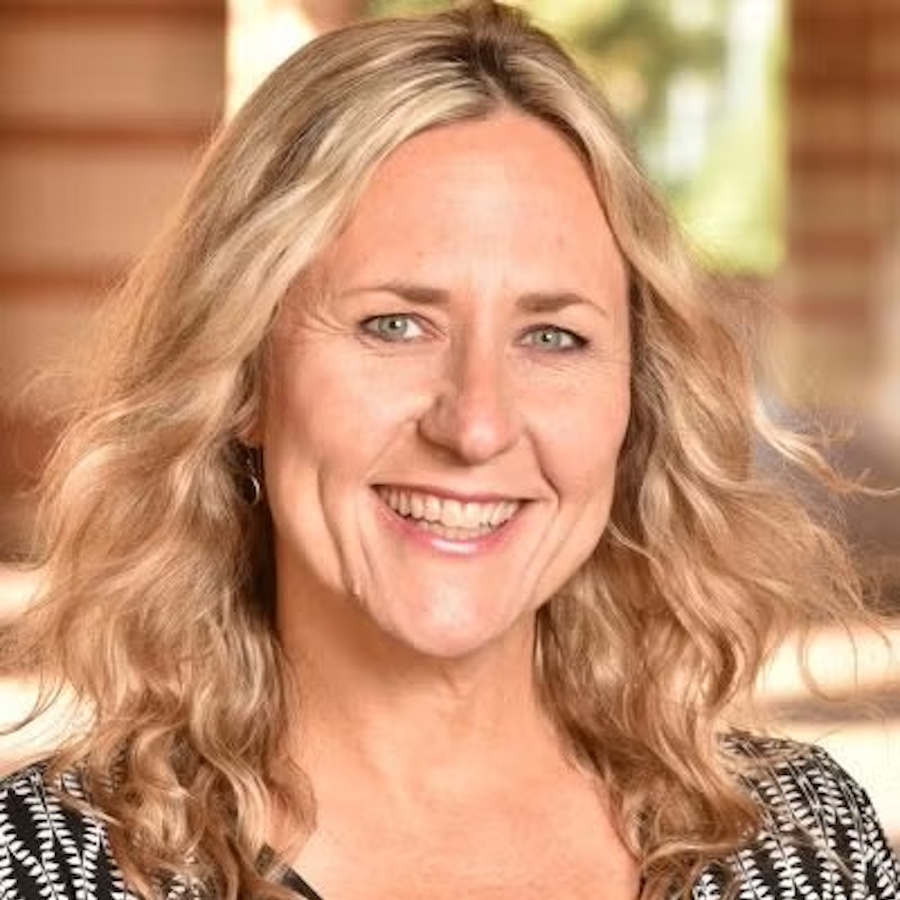
Professor Lené Levy-Storms studies how social relationships affect health and health behaviors among older adults in both community and institutional settings. She employs both quantitative and qualitative methodology and uses both primary and secondary data sets for intervention and observational inquiries. Previously, Dr. Levy-Storms has studied social support networks among minority older adults using social network analysis. Her core research concerns communication issues between health care providers and older adults, specifically paid and unpaid caregivers. She is particularly interested in how social support occurs through interpersonal communication during care. In 2003, Dr. Levy-Storms received career development award from the National Institute on Aging titled, “Therapeutic Communication during Nursing Home Care,” which laid the foundation for her ongoing research agenda. In 2010, Dr. Levy-Storms became a Health and Aging Policy Fellow and began to examine policy issues related to paid caregivers in long-term care settings, and she recently published a policy brief.

Naomi Eisenberger, Ph.D. is a Professor in the Department of Psychology at UCLA. Her research uses neuroimaging techniques to better understand why social relationships are critical for mental and physical health. She has explored the neural underpinnings of social pain—the painful feelings following social rejection or loss—and has shown that social pain relies on some of the same neural regions that are involved in processing physical pain. She has also explored the neural substrates associated with social connection—including the systems involved in giving and receiving social support from others. Her work also examines the bidirectional relationships between social relationships and health. For example, some of her work has shown that giving to others can enhance mental health outcomes and decrease physiological stress responses for the giver. Dr. Eisenberger, who received her Ph.D. in 2005, has published close to 200 papers including articles in top tier journals (Science, Proceedings of the National Academy of Sciences, Nature Neuroscience). In addition, her work has been recognized with several early and mid-career awards including ones from the American Psychological Association, the American Psychosomatic Society, the Association for Psychological Science, the International Union of Psychological Science, and the Society for Affective Science.
