
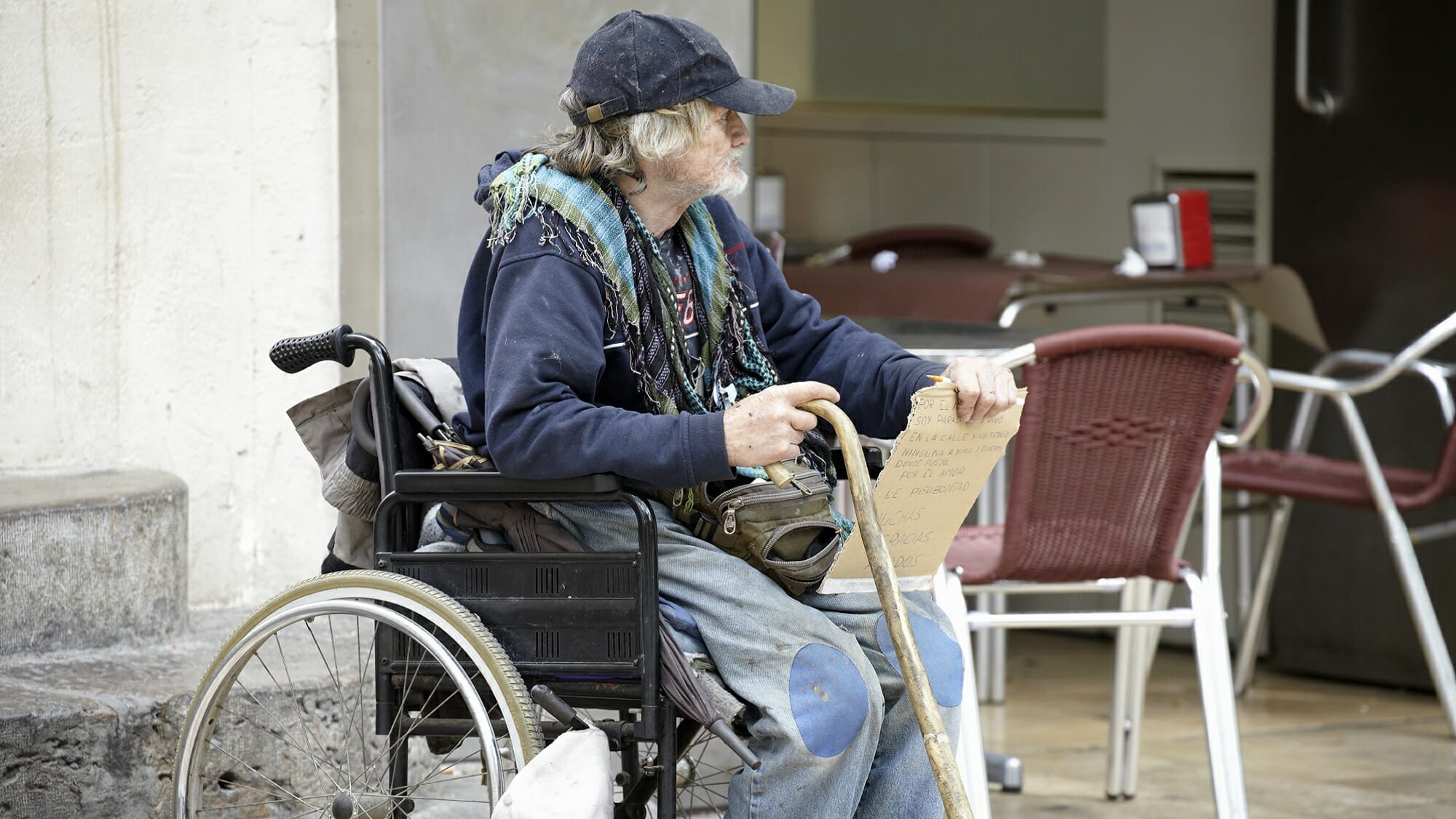
From Stories to Policy Action: Cultivating Compassion and Public Support for Older Adults Experiencing Homelessness in Los Angeles
Sarah Kang, Seewoo Li, Lois Angelo, Sawyer Hogenkamp, Lene Levy-Storms
Abstract
As Los Angeles prepares for the 2028 Olympic Games, public responses to homelessness will shape whether unhoused older adults are treated with dignity or exclusion. This project tests a scalable, narrative-based intervention to cultivate compassion and strengthen public support for evidence-based housing policy. Guided by Intergroup Contact Theory and Compassion Theory, we conduct a seven-week, randomized controlled trial with 1,600 Los Angeles residents recruited through Bovitz Inc. Participants will be randomized to a no-treatment control, narrative-only condition, or narrative-plus-action condition in which the factual narratives from formerly unhoused older adults are paired with a dictator-game donation task benefiting Mental Health America of LA. Narrative stimuli will be developed with 10 formerly unhoused adults ages 50+ through the Lived Experience Advisory Panel at Union Station Homeless Services. Outcomes include two compassion measures, affective attitudes toward unhoused older adults, and support for housing-related policies. These will be measured at baseline, immediate posttest, and Days 14, 28, and 49. Analyses will use the Discretized Response Model to distinguish genuine attitude change. Together with Mental Health America of LA, Affordable Living for the Aging, and Los Angeles Mission, findings will be translated into public-facing materials supporting Housing First and permanent supportive housing.
Field
Social Welfare/Luskin School of Public Affairs, Department of Education
Extramural Partners
American Association of Retired Persons, Los Angeles Homeless Services Authority (LAHSA), Mental Health America of LA, Affordable Living for the Aging, Los Angeles Mission, Lived Experience Advisory Panel at Union Station Homeless Services
Team
Professor Lené Levy-Storms studies how social relationships affect health and health behaviors among older adults in both community and institutional settings. She employs both quantitative and qualitative methodology and uses both primary and secondary data sets for intervention and observational inquiries. Previously, Dr. Levy-Storms has studied social support networks among minority older adults using social network analysis. Her core research concerns communication issues between health care providers and older adults, specifically paid and unpaid caregivers. She is particularly interested in how social support occurs through interpersonal communication during care. In 2003, Dr. Levy-Storms received career development award from the National Institute on Aging titled, “Therapeutic Communication during Nursing Home Care,” which laid the foundation for her ongoing research agenda. In 2010, Dr. Levy-Storms became a Health and Aging Policy Fellow and began to examine policy issues related to paid caregivers in long-term care settings, and she recently published a policy brief.

Sawyer completed an M.Ed. in Human Development and Psychology at Harvard University. He also holds a M.Ed. and B.Ed. from Queen’s University, and B.A. from University of Waterloo, majoring in Music, and Human Geography & Environmental Management. He is pursuing a PhD to further the study of relational youth violence and school climate to encompass under-supervised contexts within and outside of school grounds, such as in neighborhoods, virtual spaces, or on school buses. He serves as a consultant with an organization in Canada that trains school bus drivers on bullying prevention and mental health awareness. He’s also engaged in supporting social emotional learning in underserved populations domestically (urban and rural America), and abroad (urban and rural China). Research skills include both qualitative and quantitative analysis as well as mixed methods, having participated with interdisciplinary research groups collaborating with Canadian Federal and Provincial Government Agencies, Universities, and private organizations. Currently Sawyer is working with the APA Taskforce on Violence Against Educators, organizing and analyzing data and policy of qualitative data from school psychologists, social workers, counselors, administrators, teachers, and school staff.
