

Are you richer than most of the world? Increasing Kindness Through Global-Scale Social Comparisons
Glen Spiteri, Harry D. Coulson, Maximilian Maier
Abstract
Increasing kindness towards distant others at the global level poses a uniquely difficult challenge. There exist systematic inequities in the distribution of economic resources between countries, yet many people in rich countries remain unaware of how rich they are relative to most of the world’s population. This lack of knowledge about relative privilege may be a key bottleneck to people’s prosociality and kindness toward the global poor. In this project, we propose an intervention to address this: a rank-based nudge that informs people how high their income is relative to the global population. Our earlier work has already demonstrated that a rank-based intervention increased participants’ accuracy in estimating the global income distribution and their willingness to contribute to a global charity, albeit in a raffle-based donation paradigm. Further research is needed, however, to answer fundamental questions about the real-world applicability of the intervention, such as whether the intervention increases real-world charitable donations and pledges, whether the effects persist over time, and whether the intervention can increase kindness and generosity more broadly. The proposed grant will tackle all of these questions.
Field
Psychology, Experimental Psychology, Business
Extramural Partners
University College London, Warwick Business School (Behavioral Science)
Team

Glen Spiteri is a PhD candidate in cognitive psychology at UCLA working on moral psychology. His research focuses on how people learn to weigh the welfare of others through a process of learning from consequences, and is currently looking at downstream behaviors of this learning process, including prosociality. More broadly, he is interested in the cognitive mechanisms that underlie (moral) judgment and decision-making.
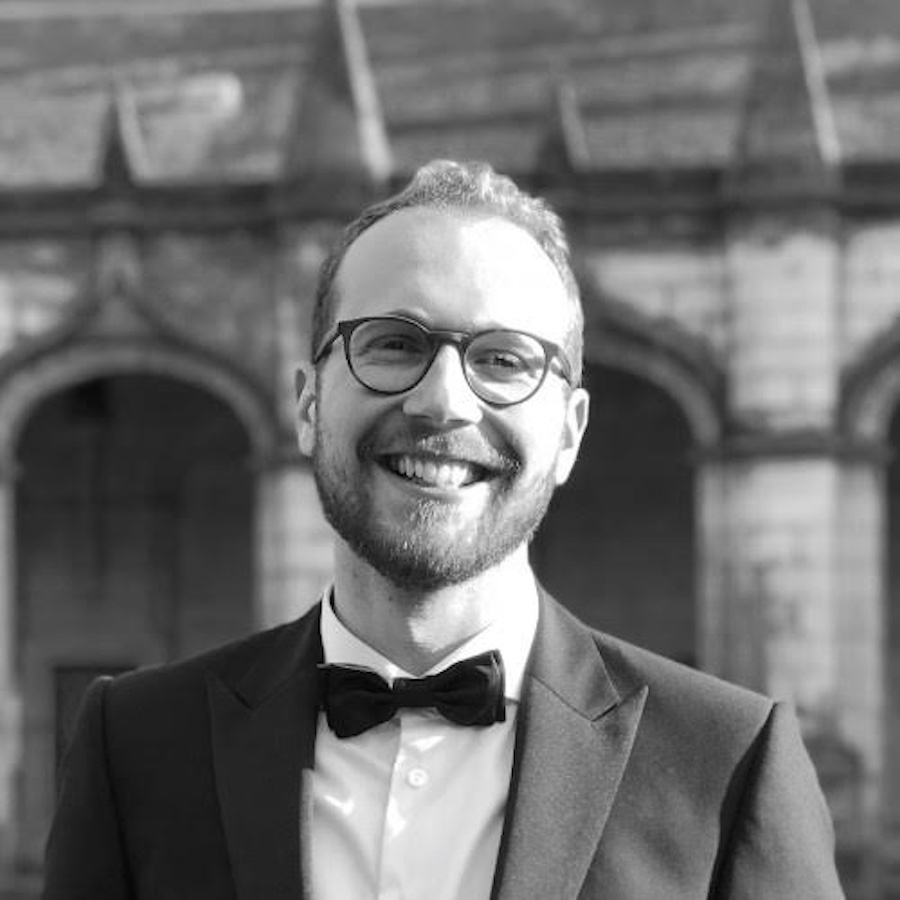
Harry Coulson is a PhD student at University College London (UK). His research explores social norms, specifically how others’ behavior influences judgments and decision-making, and how we can leverage this to change behavior. He is currently investigating whether communicating one’s rank within a group increases prosocial behaviors such as charitable donations and pro- environmental behavior.

Max Maier is an Assistant Professor in Behavioural Science at Warwick Business School, interested in decision making psychology, computational modelling, and applied statistics. His research aims to build computational models of how people make moral and prosocial decisions and test them against experimental data (e.g., Maier, Cheung, & Lieder, 2026, NHB). Before coming to Warwick, he completed his PhD in Experimental Psychology at University College London.
