
Compassionate Conversation: UC Berkeley Professor john a. powell promotes bridging and belonging
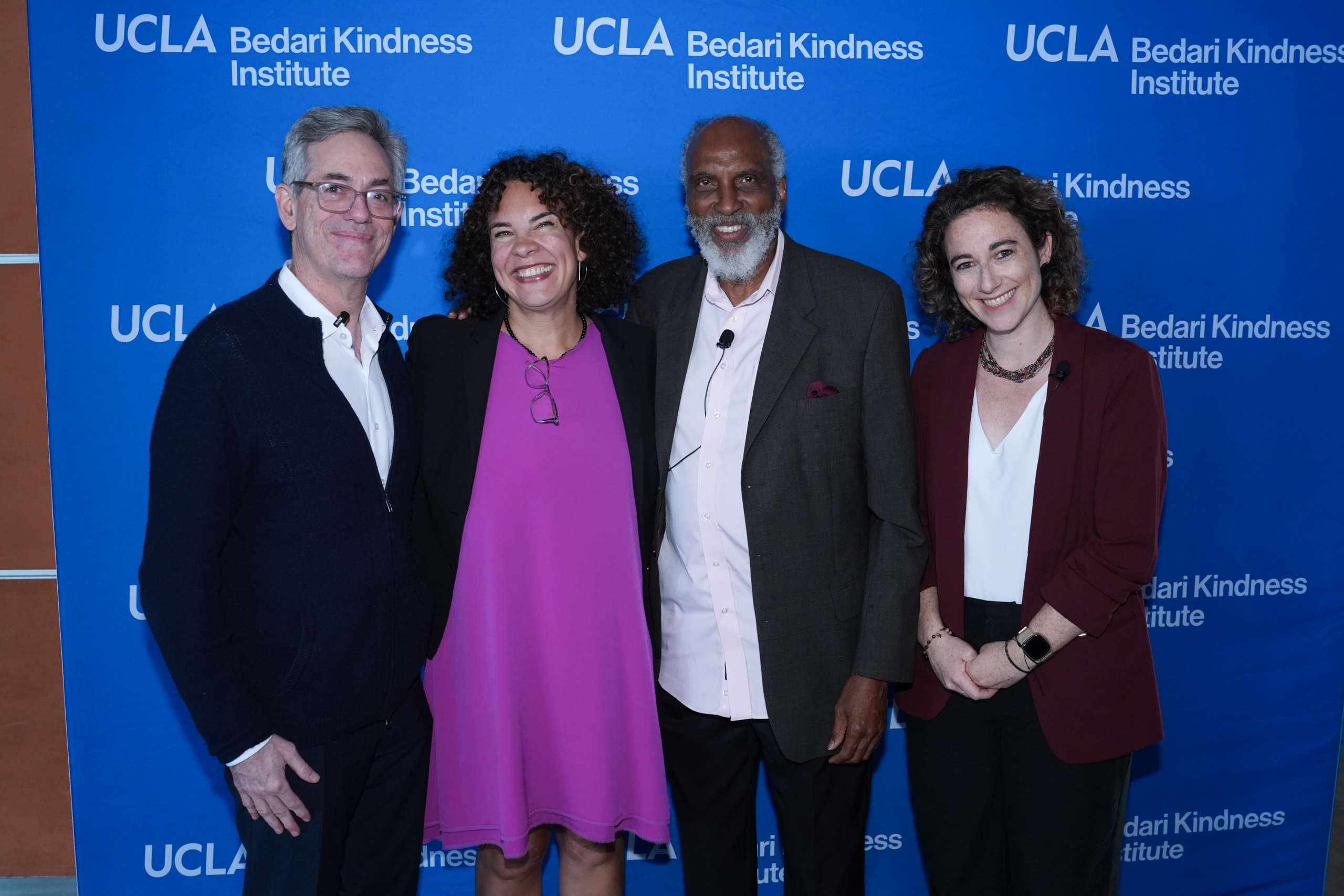
From left to right: David Myers, Ralina Joseph, john powell, and Maia Ferdman.
By Hannah Park
On Wednesday, April 15, the UCLA Bedari Kindness Institute (BKI) welcomed Professor john a. powell, director of the Othering & Belonging Institute at UC Berkeley and author of The Power of Bridging as the final speaker of BKI’s 2025-2026 “Compassionate Conversations” series. After participating in an intimate small-group dialogue with UCLA students, powell shared his philosophy of bridging and belonging with a larger audience during a panel discussion with BKI deputy director Maia Ferdman and Vice Provost of Inclusive Excellence and Professor of African American Studies at UCLA, Ralina Joseph.
Part 1: Lunch with Staff and Faculty Bridge Builders
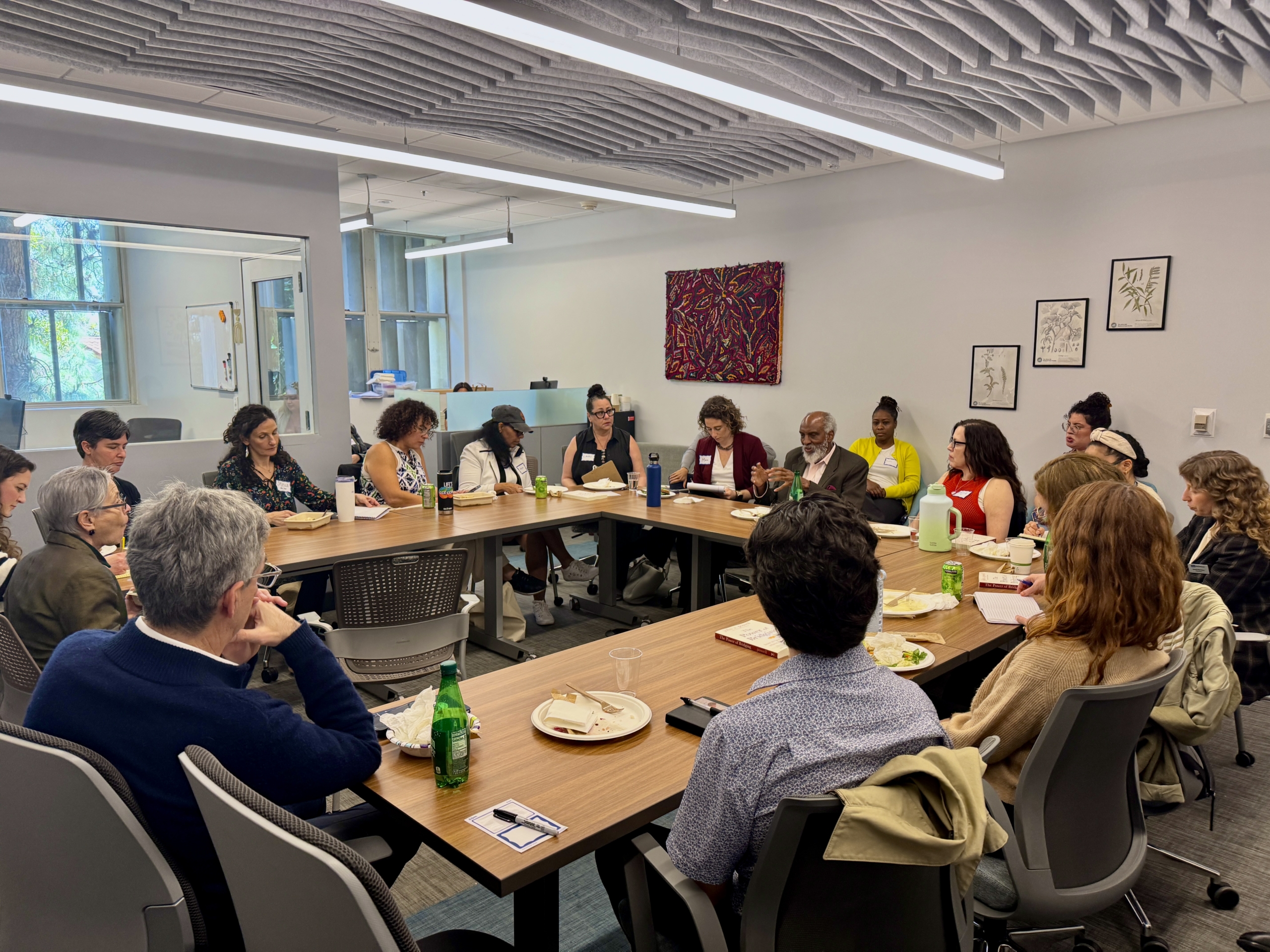
Prof. powell meets with faculty and staff at BKI headquarters.
To kick off the day, Prof. powell met with a small group of UCLA staff and faculty who are dedicated to dialogue and bridge building efforts on campus. The conversation centered on ways to rebuild trust on campus after rupture, how to co-create institutional belonging, and how to bridge while staying true to closely-held values.
Part 2: Dialogue with UCLA Students
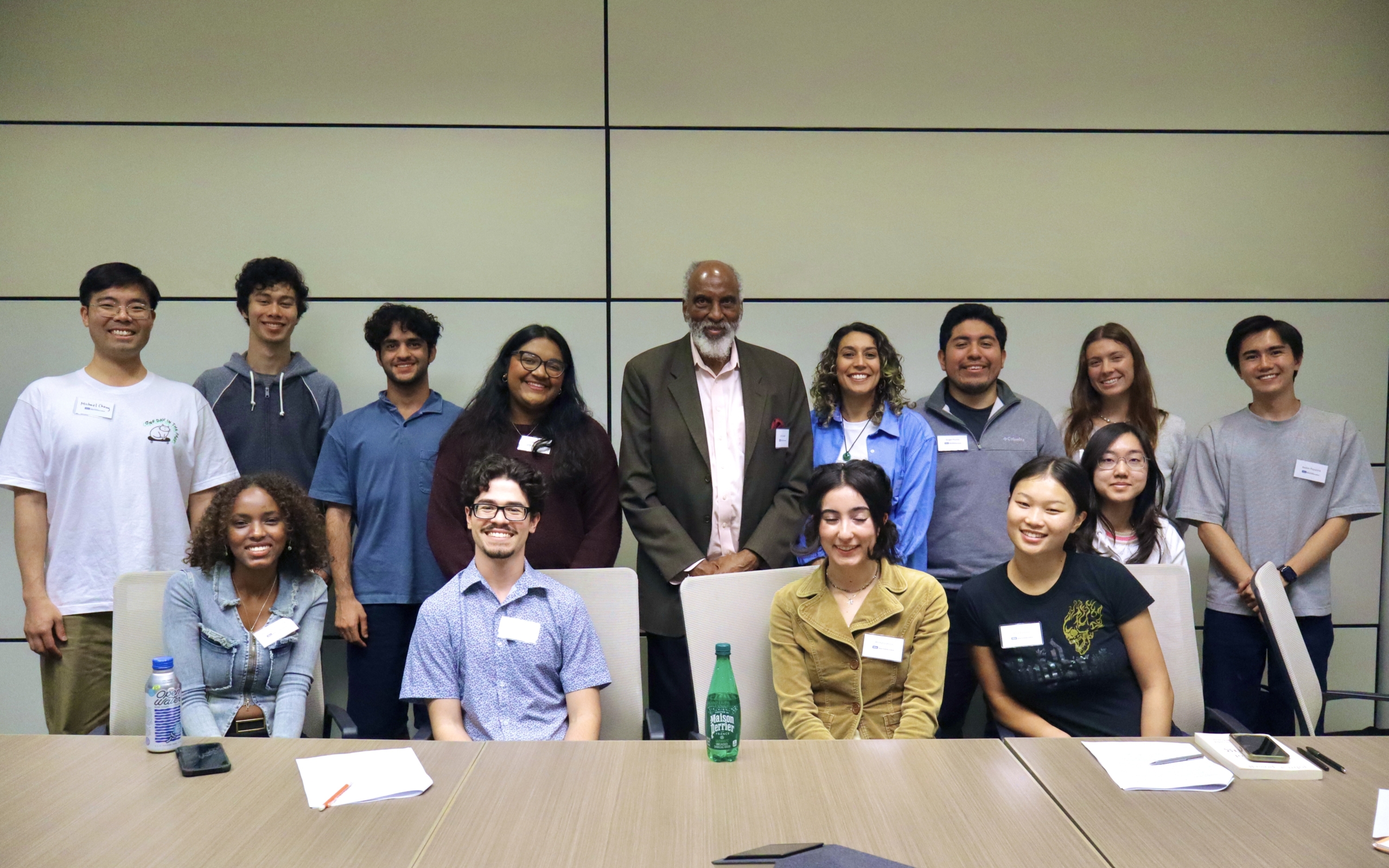
Professor john a. powell (center) with UCLA students.
In the afternoon, a small cohort of students became acquainted with Professor powell and his concepts of belonging and othering. powell guided students to view bridging through psychological, sociological, and anthropological lenses.
According to powell, Abraham Maslow’s students argued that belonging should form the foundation of his famous hierarchy of needs (rather than the third tier): after all, human beings do not birth or feed themselves as infants. powell went on to underscore humankind’s deep-seated need to be seen and connected.
“We don’t recognize our self until that self is recognized by others,” powell said.
Then, Prof. powell identified storytelling as the key skill that set Homo sapiens apart—telling stories birthed the Cognitive Revolution by facilitating collaboration and group cohesion. However, stories have also fragmented societies, especially in today’s rapidly changing world. Pandemics, climate change, technological revolutions, and migration, among other global events, destabilize communities and make them more likely to turn on one another and yearn for a “mystical past.” powell called these latter narratives breaking stories—those that establish and ostracize an “other,” a key strategy of authoritarian dictators seeking to amplify fear and unite people against a common enemy.
“[There is a fear that] a new world is evolving, and you will not belong.” – john a. powell
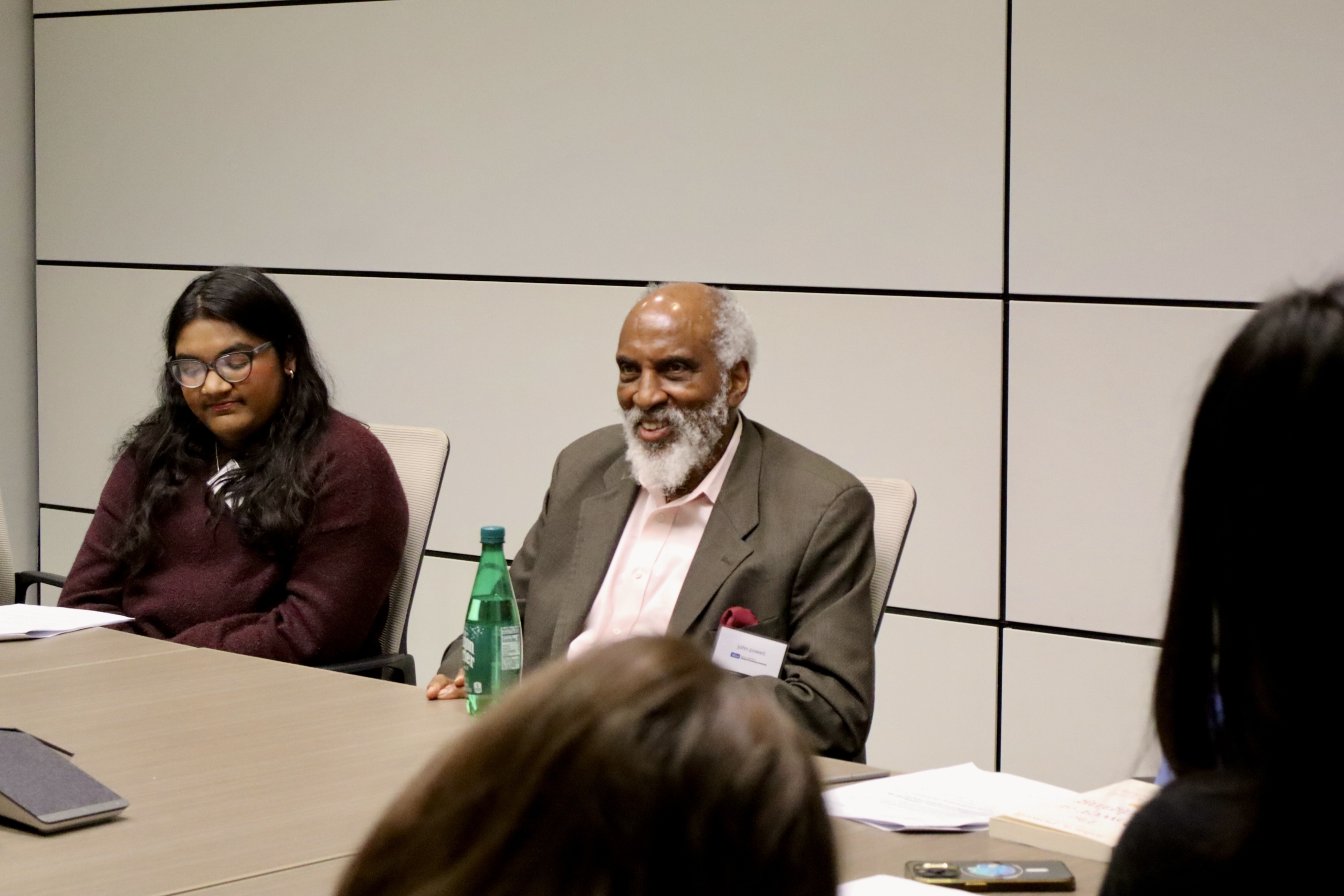
Dialogue Across Difference intern Shreya Sundar (left) listens to a remark by Prof. powell.
In order to foster understanding and greater kinship with all living things, powell encouraged telling bridging stories instead (emphasizing the common “we”). How does one of the nation’s most preeminent bridge-builders approach bridging?
“[Prioritize] belonging before belief,” powell said. “We may start with the Zulu phrase Sawubona, which translates as ‘I see you’…People might have wrong thoughts, but they never have wrong feelings.”
powell strives to conceptualize a world espousing belonging without othering, unlike organized institutions and religions that decide who belongs, excluding everyone who falls outside their bounds. He notes that this approach is not unprecedented: two thousand years ago, in a world rife with enslavement and oppression, Jesus made the radical statement that “We are all children of God.”
Bridging, powell notes, does not mean that you have to like the person on the other side. It simply involves seeing someone with one’s heart, without sacrificing their humanity.
Sometimes one is unable to bridge, especially if their safety and well-being are at risk. But if one decides to bridge, beautiful results may follow—as powell illustrated in a heart-warming anecdote. Prof. powell recalled ceding his remaining time on a panel to a gentleman who had wanted to ask a question, but was overlooked. When the two met again at a festival, the man asked powell to work together because, despite their political differences, powell “saw me with such love and care.”
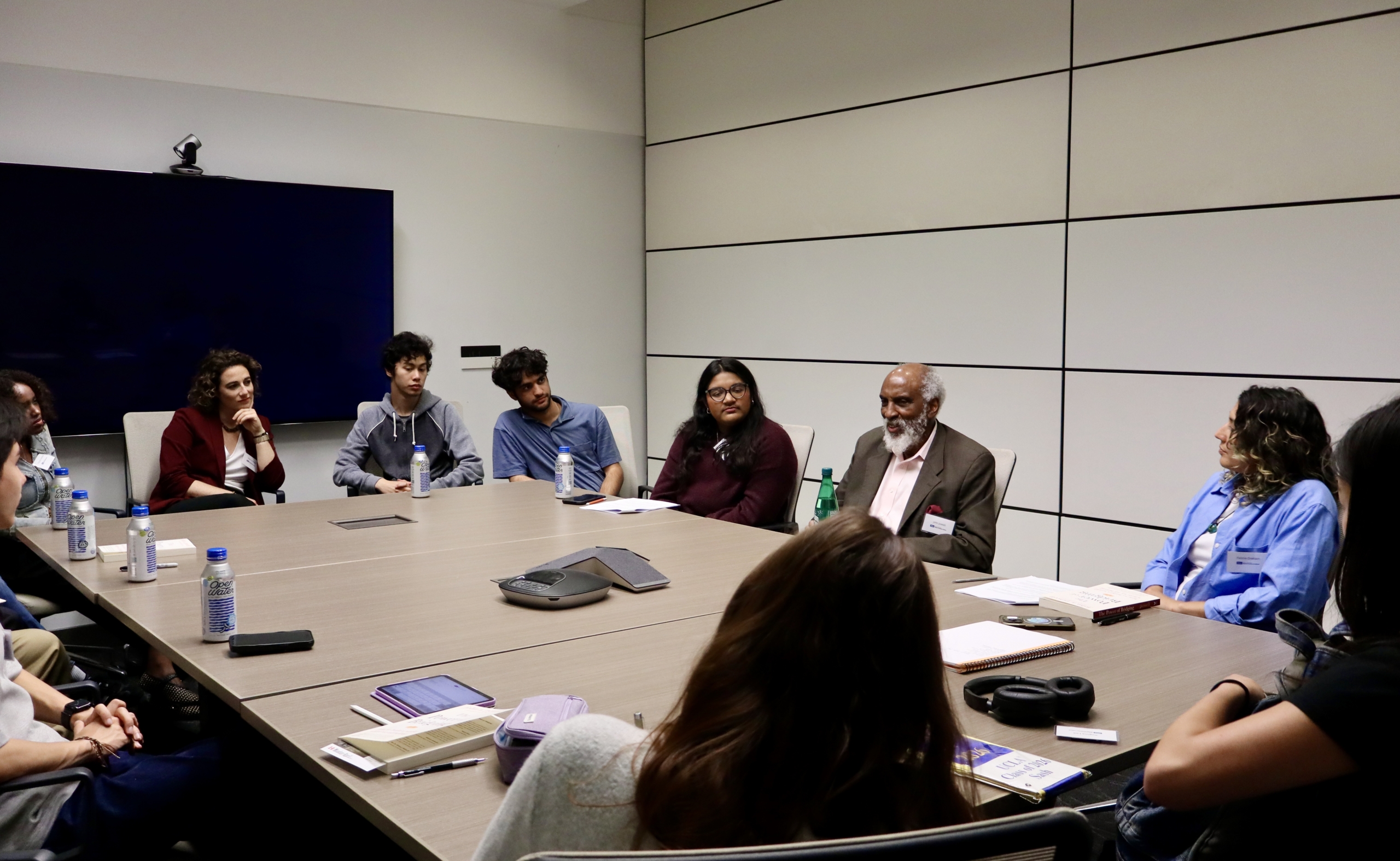
Prof. powell speaks about bridging.
Part 3: Compassionate Conversation
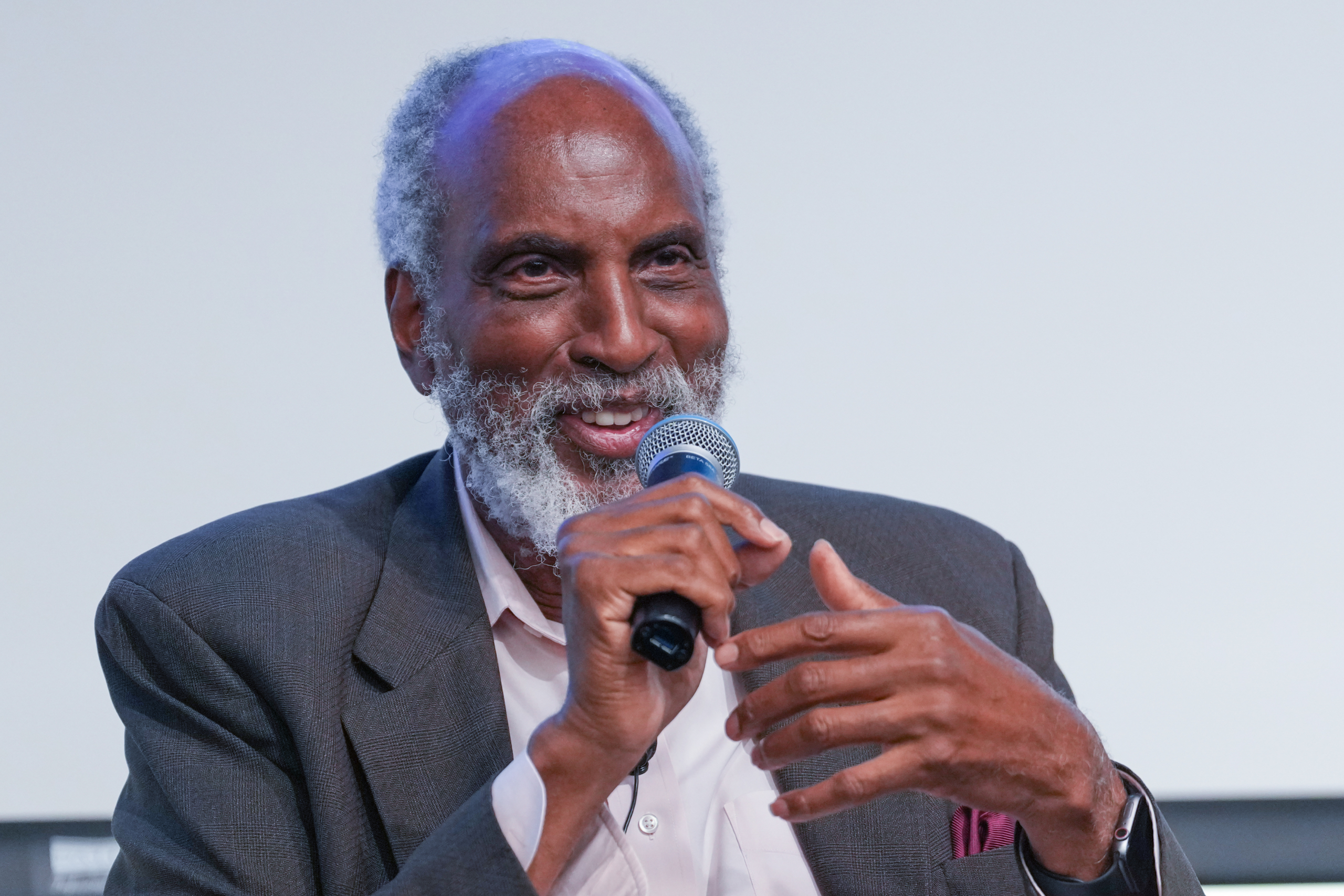
A close of Prof. powell telling a story.
Following an evening reception and book signing, Prof. powell shared the power of bridging with a packed auditorium. Before inviting Prof. powell to the stage, BKI deputy director Maia Ferdman invited the audience to take a grounding moment.
“Think about a moment where you felt belonging,” Ferdman said. “What was it? Where were you? Who were you with?”
She then encouraged the listeners to dream about a space where they wished to feel or foster belonging—leaving them holding their best experiences while aspiring toward their greatest dreams. This exercise aligned with Prof. powell’s best practices presented in his latest book, The Power of Bridging: “The first is to remember to breathe. I mean a deep, soulful breath that puts us back in touch with our bodies” (powell 196).
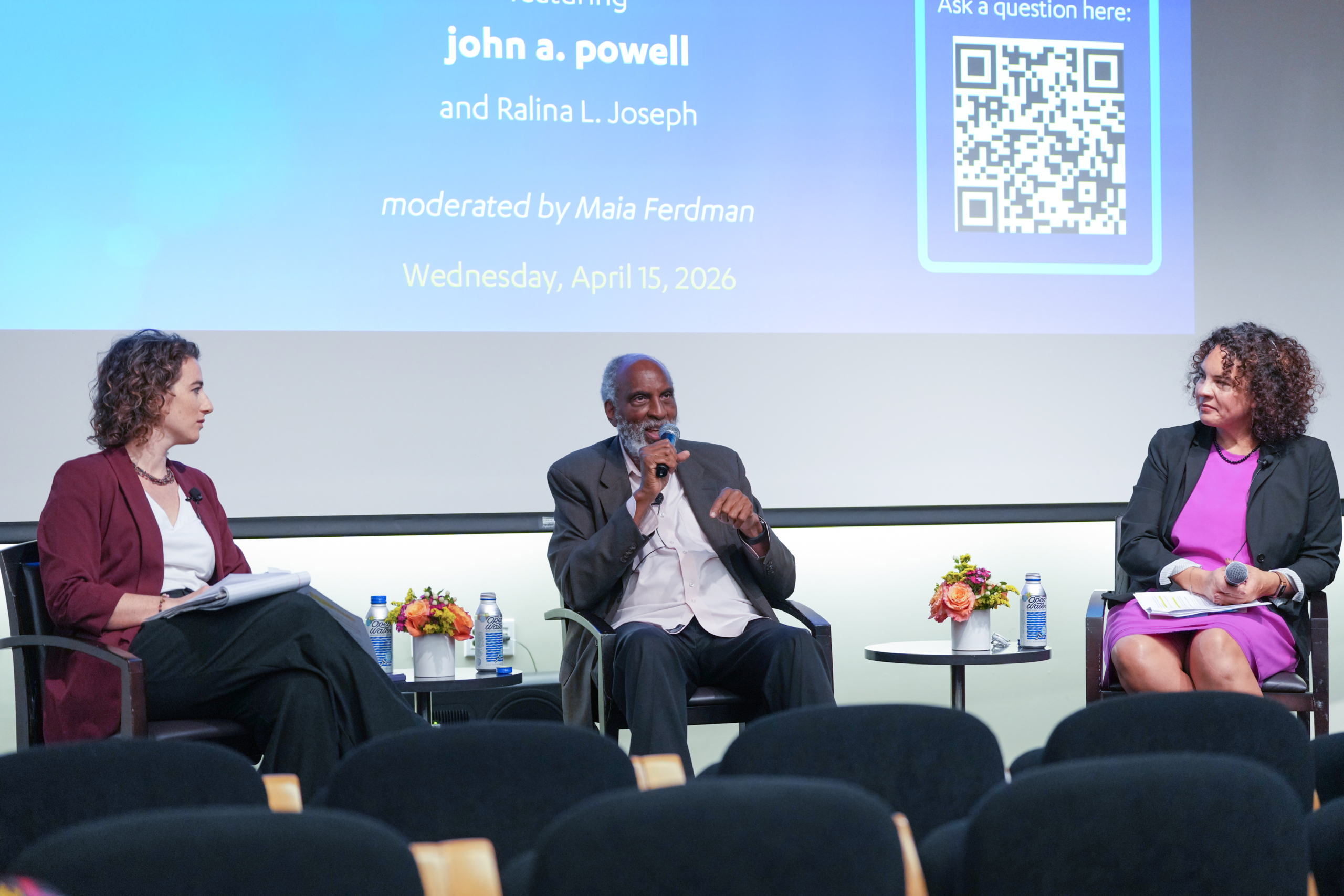
The panel, from left to right: Maia Ferdman, Prof. powell, and Ralina Joseph.
Prof. powell introduced bridging to the audience by first emphasizing the need for dialogue. Dialogue is essential for bridging differences—if people were identical, there would be no need for conversation. He also noted that we “sometimes have to bridge with aspects of ourselves,” because we also contain diverse “selves.”
powell added that when considering bridging, people often jump to the most difficult scenarios—whether they can bridge with people who dehumanize them or even wish to kill them.
“Are you saying to me I should bridge with the devil?” Prof. powell recalled being asked.
“That would be a long bridge, so let’s not start there,” powell continued. “Start with something that’s doable. Sometimes, when we list the most difficult [bridges], that’s a recipe for inaction.”
powell then suggested that aspiring bridgers start with short bridges—with someone they know, who shares a common language, food, history, or religion, but still has some differences to navigate. Like training for a marathon, he said, one should first take a walk around the block before working their way up to greater challenges. Eventually, bridging can become part of one’s identity.
That being said, if bridging still seems impossible, powell urged listeners to avoid breaking. Crucially, while bridging involves seeing the humanity in others, breaking starts by sacrificing someone’s humanity and flattening them into labels. Brain imaging studies provide concrete evidence distinguishing bridging and breaking—when one deeply breaks, or “others,” someone, the brain region that recognizes another human being fails to light up.
In order to prevent such breaking, powell suggested that one ask questions that “break hearts open.” For example, researchers in this brain imaging study asked participants who struggled to see unhoused persons as fellow human beings, “What kind of vegetables do you think they like?” Ferdman shared BKI director Prof. David Myers’ go-to inquiry: “What do you mean by that?” Then, Joseph related one of her favorites: “Tell me about the person in your life who is the best listener.”
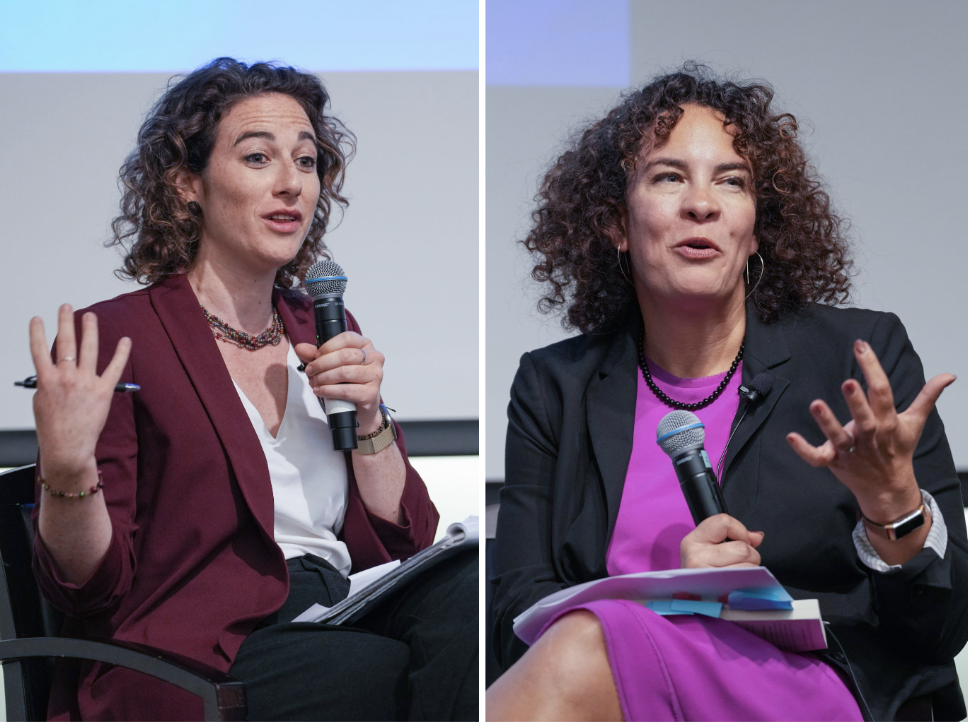
Ferdman and Joseph share their heartwarming questions.
After Ferdman and Joseph joined powell in conversation, he shared a personal anecdote about his own belonging, and subsequent breaking, with his fundamentalist Christian family. Despite the incredibly painful break, where powell was “excommunicated” for his beliefs, he still cherished his parents—especially his mother, a “bridging savant.” In one story, although his family initially insisted powell and his partner sleep in separate rooms when they visited the family home (because they were not married: a sin in their Christian belief), leading the couple to sleep in a hotel instead, powell’s mother eventually wrote him a letter. After witnessing their love for one another, she called the couple married “in the eyes of God” and welcomed them home. Regardless of his own beliefs concerning “the eyes of God,” powell appreciated her ability to hold onto her faith and her son simultaneously.
powell moved from this personal story of bridging to a number of anecdotes featuring bridging within and across communities. When asked about bridging across recent ruptures, such as in the aftermath of the encampments at UCLA, powell emphasized the university’s role in creating a space and container for conversations—and letting people “co-create” said container. Moreover, one does not need a prominent bridging figure like Mandela, Gandhi, or King to rally communities. Ordinary people, such as those who protested the ICE killings in Minnesota, can work within their spheres of influence and bridge through simple actions like being a good neighbor.
Prof. powell also explained that while bridging can facilitate cooperation, it should never be purely instrumental. Bridging is not merely a persuasive technique: it should involve being fully present and embracing another person’s humanity. Additionally, bridging involves a willingness to enter a place of vulnerability. While it can be dangerous to bridge, it can be just as dangerous to not bridge.
“You’re not trying to create a safe environment,” powell said about bridging spaces. “You’re trying to create a productive environment that’s safe enough.”
Finally, institutions should take a clear stance and declare that everybody belongs. While such gestures may appear symbolic and therefore meaningless—after all, it does not reflect the current reality—powell suggested otherwise by relating a final story. In 1948, the prominent sociologist and civil rights activist W.E.B. du Bois criticized First Lady Eleanor Roosevelt’s desire to pass the United Nations Declaration of Human Rights. Even though du Bois argued that this move had been “just symbolic so liberals can feel good,” Roosevelt pushed back, and the declaration eventually passed. While reluctant to pass judgment, Prof. powell stated that du Bois was both right and wrong.
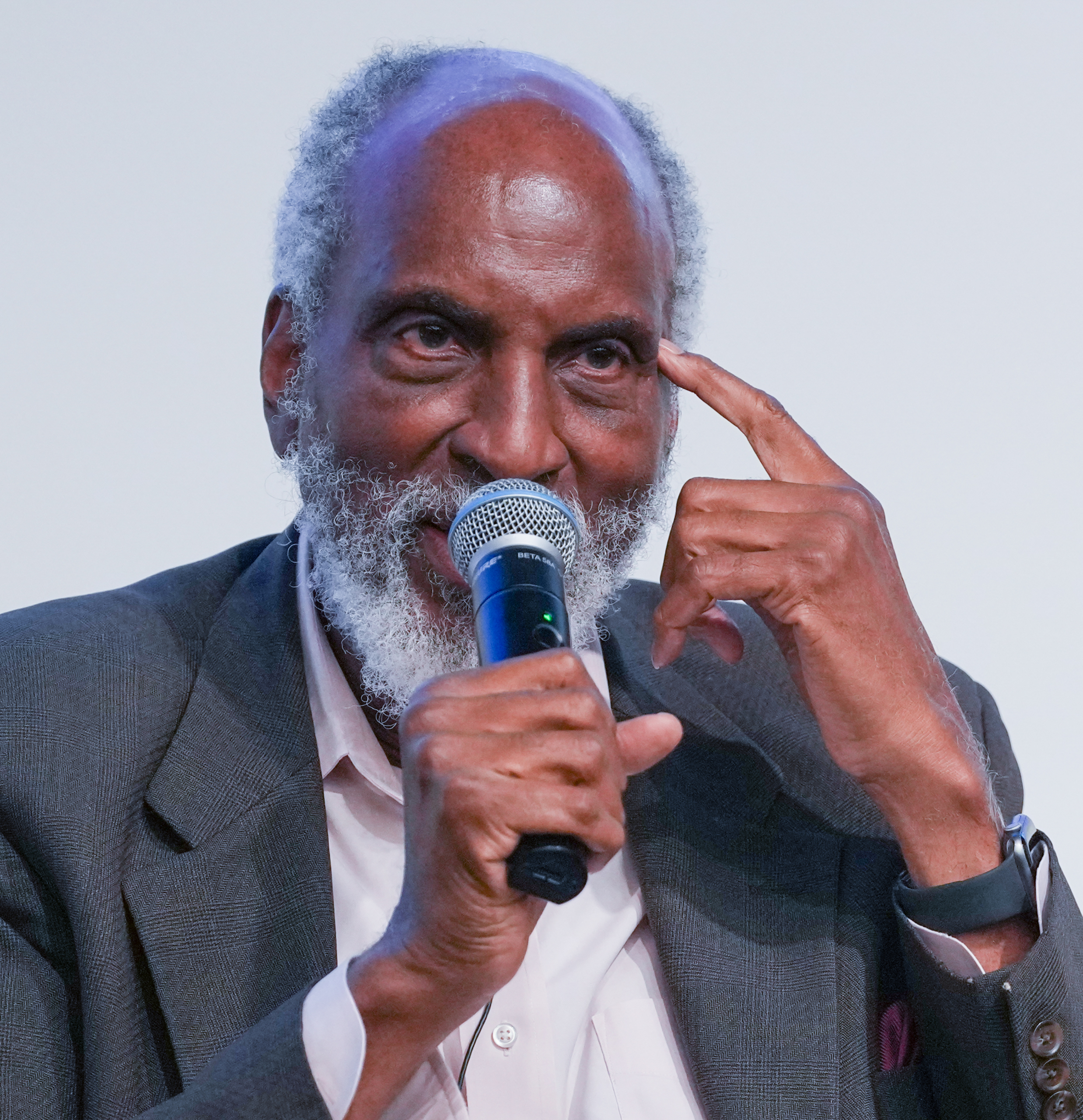
powell closes with a powerful anecdote.
“[du Bois] was right that it was symbolic,” powell said. “He was wrong that it was just.”
In the same way, refusing to engage in othering and insisting that everyone belongs is symbolic—because that is not the world we live in. But, as powell says, we must make sure that belonging is not just symbolic.
Event Photos
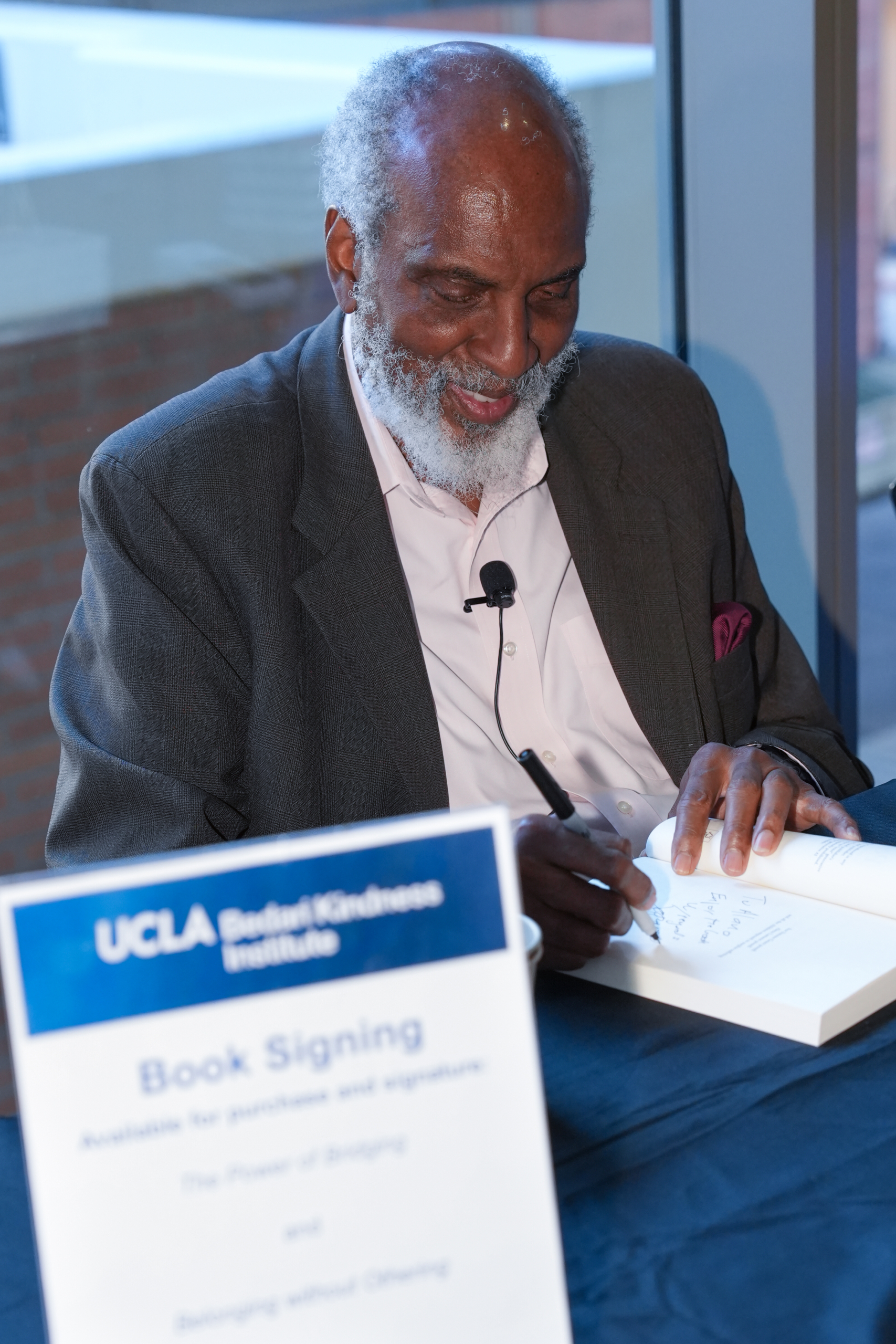
Prof. powell signs a copy of The Power of Bridging.
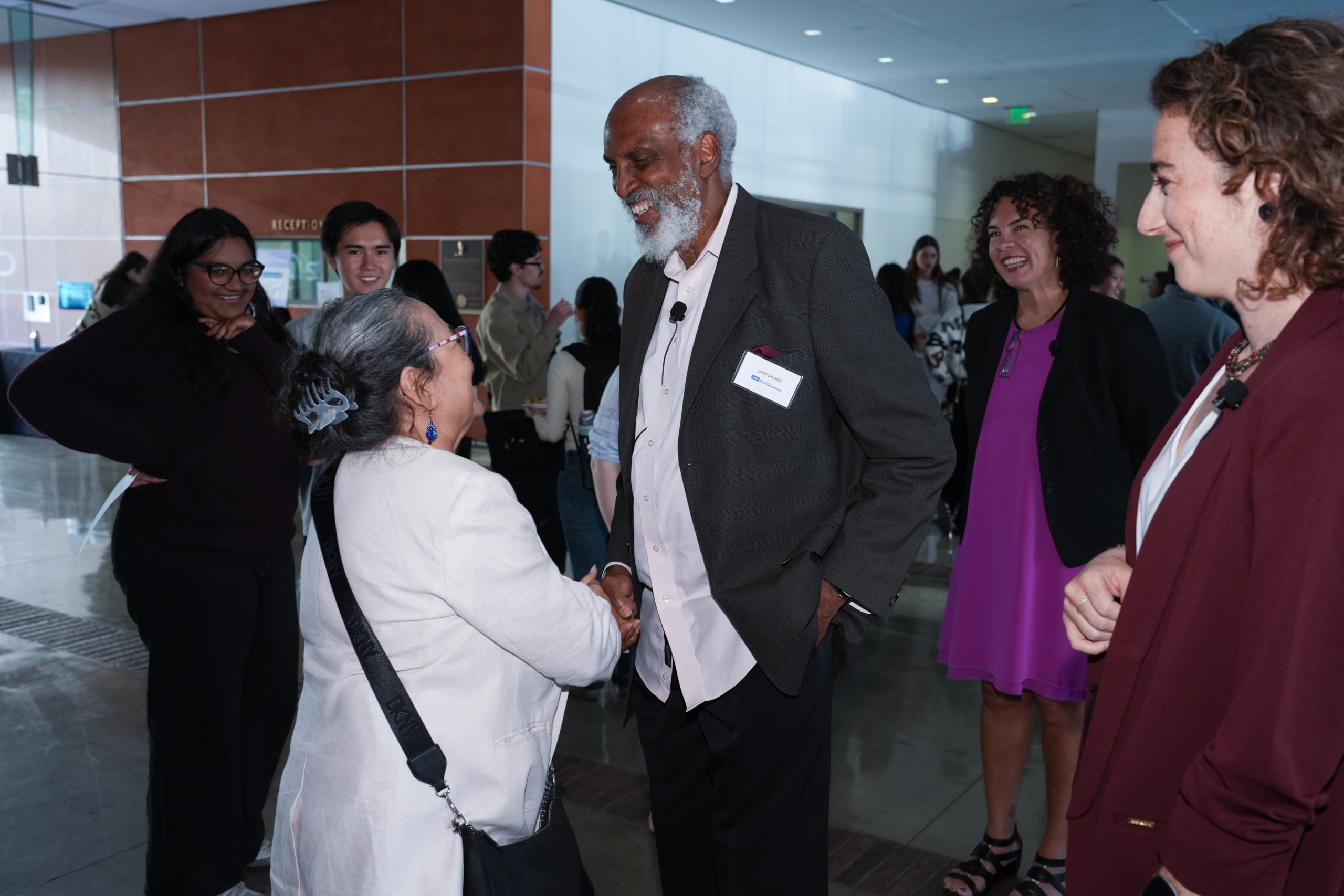
Prof. powell greets an attendee of the compassionate conversation with his fellow panelists and DaD interns.
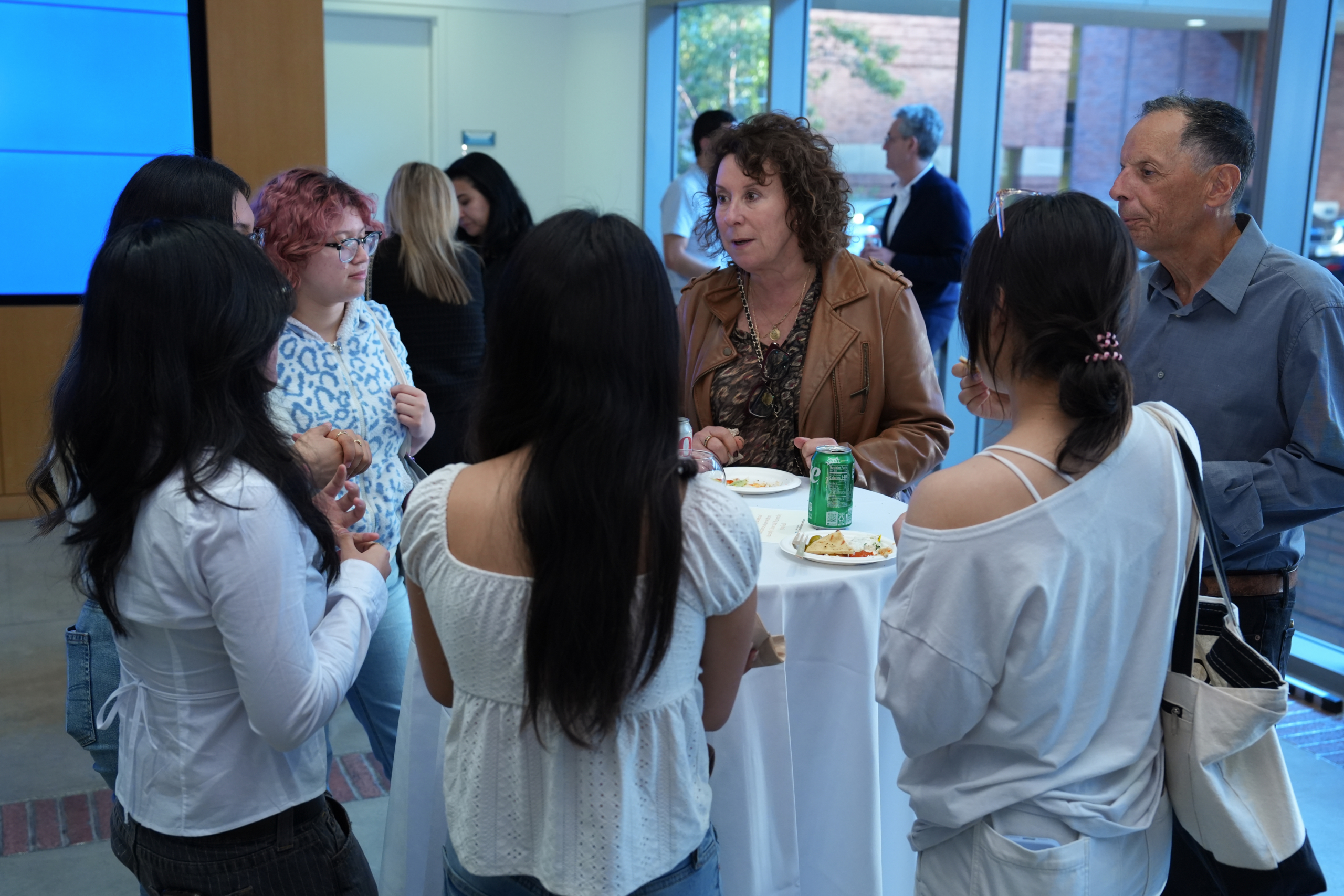 Attendees gather around a table for conversation before the main event.
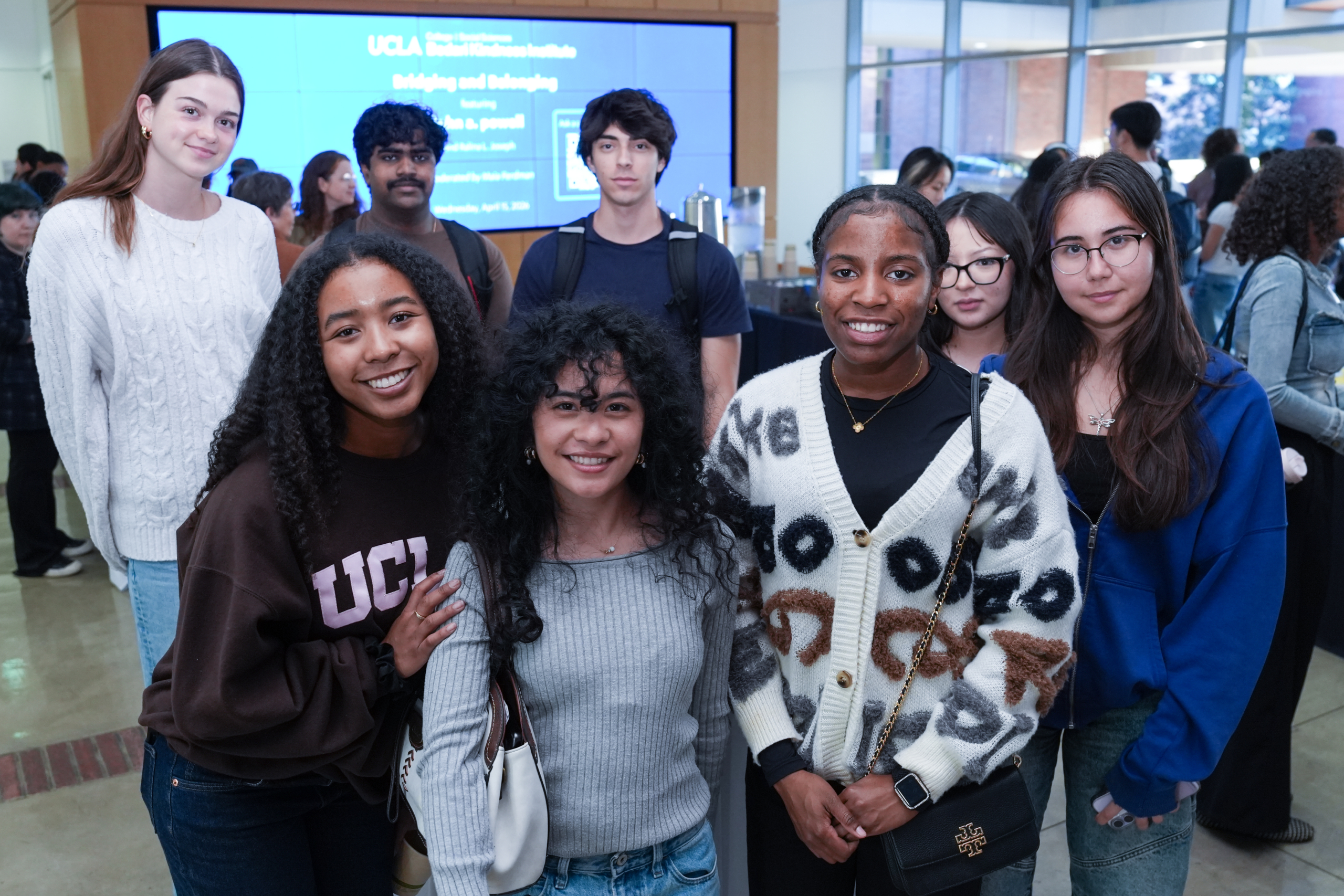
UCLA students gather shortly before the compassionate conversation.
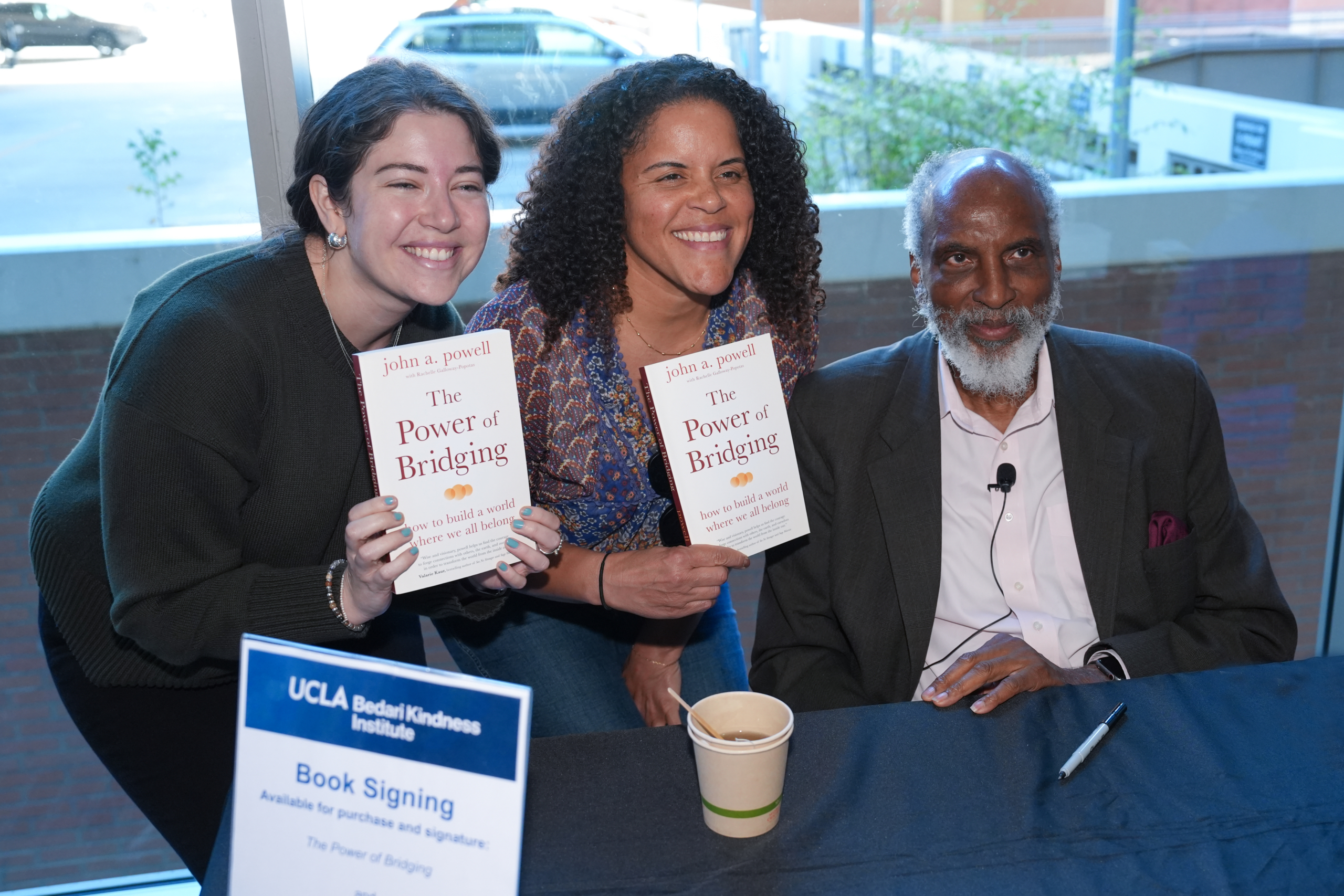
john a. powell takes a picture with happy to-be-readers of his book.
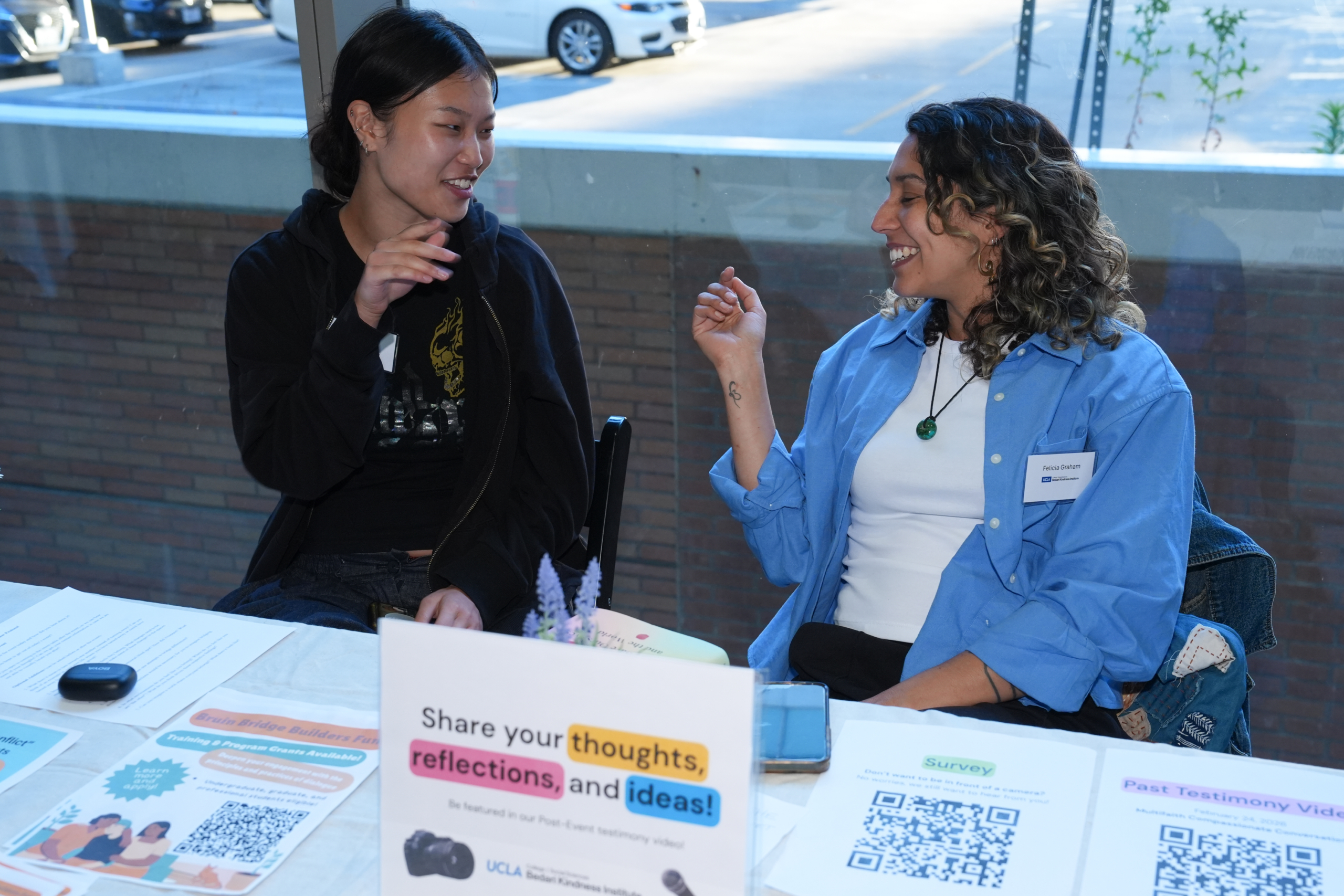
DaD intern Regina Lee and DaD graduate researcher Felicia Graham collect testimonies.
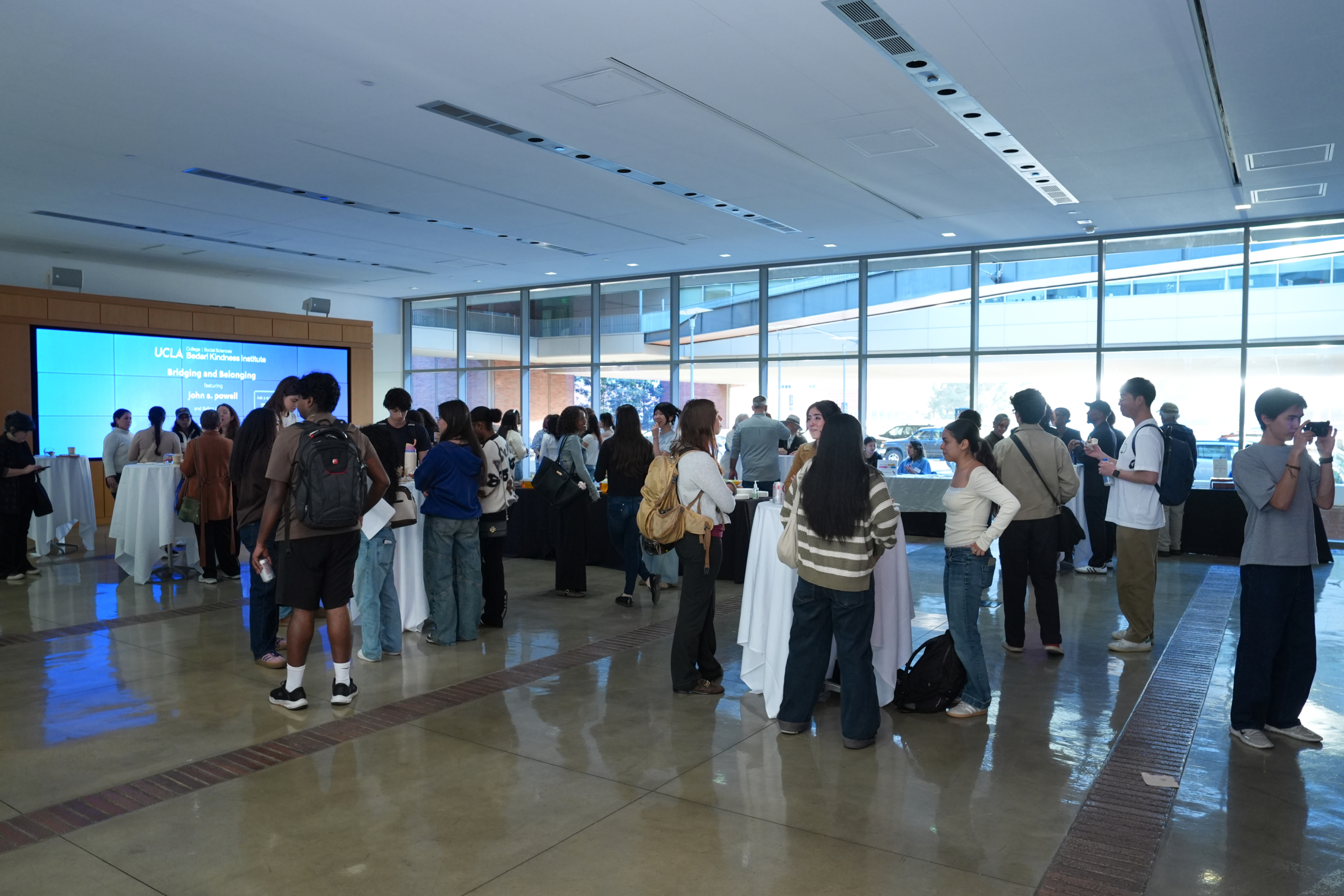
The reception bustles with dialogue and connection.
About the Speakers
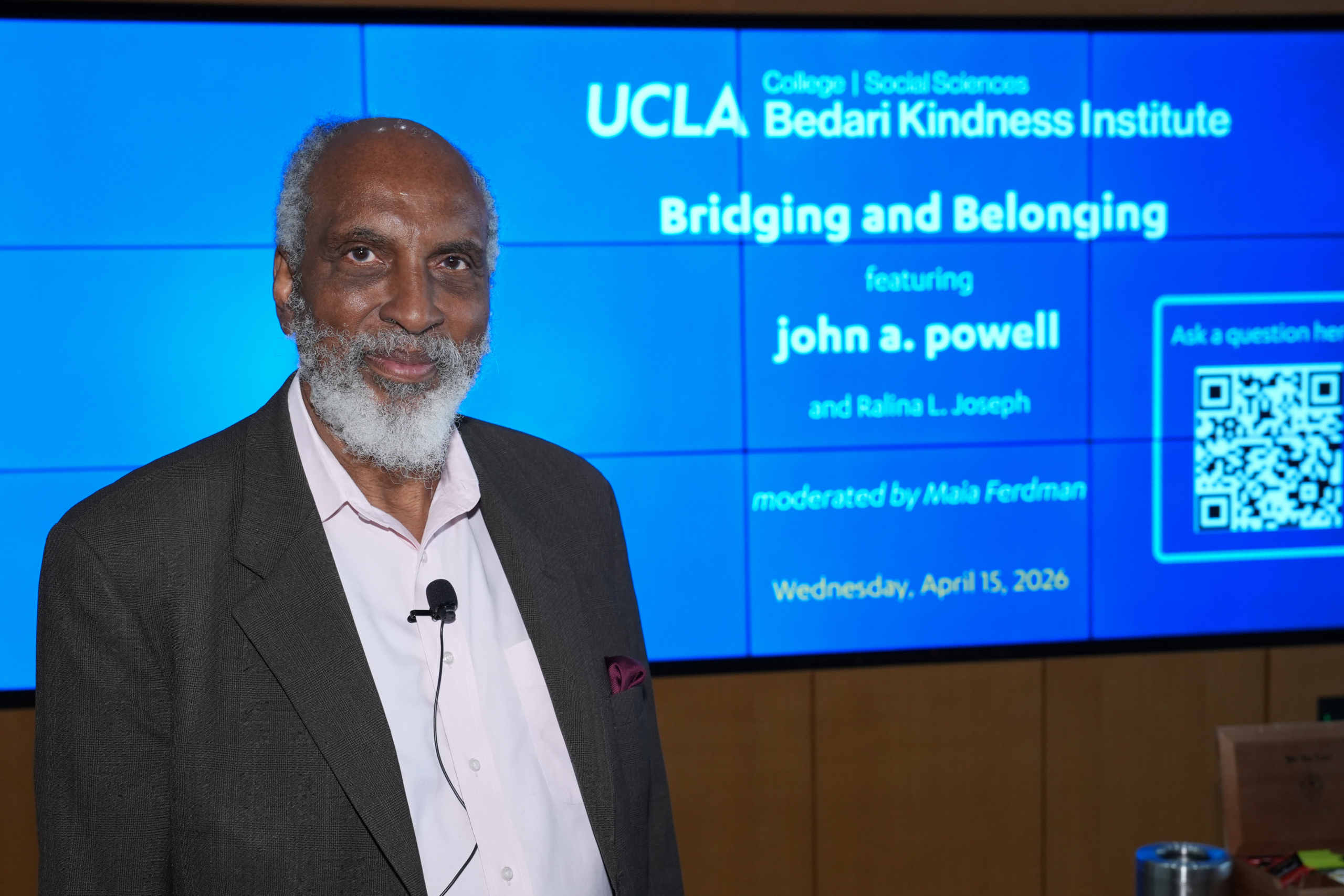 john a. powell is a renowned scholar and advocate in the areas of civil rights, structural racism, housing, constitutional law, equality, democracy, and belonging. He is the director of the Othering & Belonging Institute at UC Berkeley, where he holds the Robert D. Haas Chancellor’s Chair in Equity and Inclusion and is a Professor of Law, Ethnic Studies, and African American Studies. Professor powell has served as the National Legal Director of the ACLU and is well-known for the development of an “opportunity-based” model for thinking about affordable housing, racialized space, and the many ways that housing influences other opportunity domains including education, health, health care, and employment. He is the author most recently of The Power of Bridging.
Ralina L. Joseph is Vice Provost of Inclusive Excellence and Professor of African American Studies at UCLA. Her career spans over two decades of advancing inclusive excellence in higher education. She founded the Center for Communication, Difference, and Equity (CCDE), known for programs like “Interrupting Privilege,” which fosters transformative conversations on race and power. Prof. Joseph is the author of four books, including Racial Exhaustion: How to Move through Racism in the Wake of DEI (NYU Press, 2025). Her research focuses on the intersectional nuances of racialized communication, Black representation, multiracial identity, and women of color feminism. A celebrated mentor and public scholar, Prof. Joseph has received numerous awards and is a frequent speaker nationwide. She is also a mother and community advocate dedicated to using dialogue as a tool for justice.
